
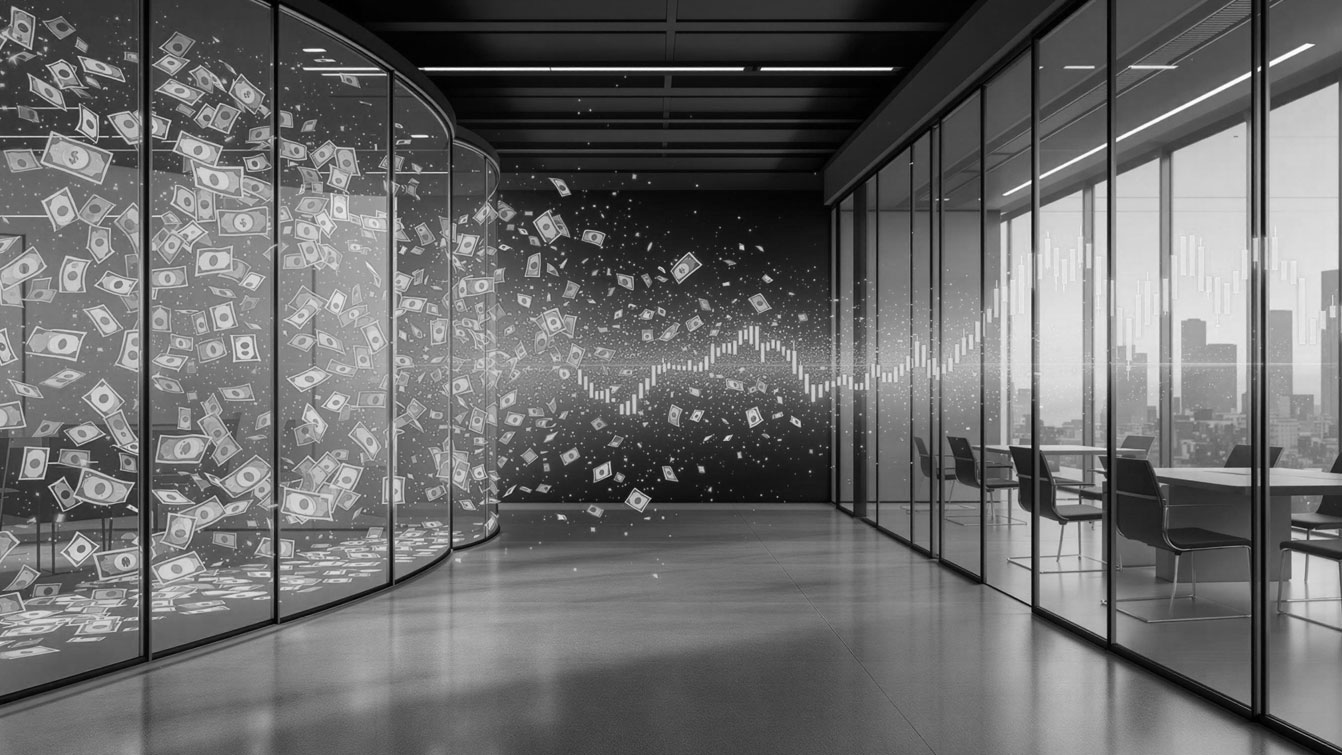
In the world of architecture and design, the focus is often on visual aesthetics, spatial flow, and material selection. Yet, a hidden factor can quietly sabotage even the most brilliant project: acoustics. Poor acoustic design isn’t just an annoyance; it’s a significant financial liability that can lead to staggering losses in productivity, costly rework, and damaged client relationships. Office workers can lose between 21.5 and 86 minutes of productive time every single day due to noise distractions, costing businesses hundreds of billions of dollars annually.
Viewing acoustics not as an expense, but as a critical form of risk management, is essential for protecting a project’s budget and ensuring its long-term success. By avoiding a few common but costly errors, you can deliver spaces that not only look exceptional but also perform flawlessly. Here are the five most financially damaging acoustic design mistakes and how to avert them.
1. The Foundational Fallacy: Confusing Sound Absorption with Soundproofing
This is the single most common and costly misunderstanding in acoustics. Confusing these two distinct concepts often leads to expensive materials being installed that completely fail to solve the client’s problem.
Think of it this way: sound absorption is a sponge, while soundproofing is a bucket.
- Sound Absorption uses soft, porous materials (like acoustic panels) to soak up sound energy within a room, reducing echo and reverberation to improve sound quality. It makes a noisy restaurant feel more intimate or an open-plan office less chaotic.
- Soundproofing uses heavy, dense, and airtight materials to create a barrier that blocks sound from traveling between spaces. This is what’s needed to ensure a confidential conversation in a boardroom isn’t overheard in the adjacent office.
The financial damage from this mistake is severe. If a client needs soundproofing but receives sound absorption, the initial investment is a total loss. This is followed by the costs of demolition, disposal, and installing the correct solution, not to mention project delays and reputational harm. This is why common DIY “fixes” like egg cartons or hanging carpets on walls fail; they lack the necessary mass to block sound transmission.
2. The Low-Frequency Blind Spot: Ignoring the Power of Bass
Low-frequency sound (bass) is a unique challenge. Its long wavelengths allow it to travel through standard building structures with ease, making it a primary source of noise complaints in mixed-use developments, residential buildings, and offices with high-end AV systems. A critical error is assuming that standard acoustic panels, which are excellent for absorbing mid- and high-frequency sounds like speech, will have any meaningful effect on bass.
Controlling bass requires a different strategy. It must be trapped or blocked with specialized solutions like dedicated, thick bass traps placed in room corners where bass energy accumulates, or through structural solutions like decoupled “room-within-a-room” construction. Failing to account for bass can lead to a project being an acoustic failure, even if it sounds fine for conversation. Furthermore, persistent low-frequency noise is linked to increased physiological stress and fatigue, directly impacting occupant health and productivity.
3. The Hidden Leak: Neglecting Flanking Transmission Paths
Even a perfectly constructed soundproof wall can be rendered useless if sound finds an indirect route around it. This is known as a flanking path. It’s the acoustic equivalent of a leak in a boat; no matter how strong the hull is, a small hole will still let water in.
Common flanking paths include shared ceiling plenums (the space above a drop ceiling), unsealed gaps around pipes and outlets, continuous flooring that runs under a wall, and HVAC ductwork connecting two rooms. A conversation in one office can travel up into the ceiling, over the wall, and down into the next office, completely bypassing the expensive soundproof partition. The financial implication is stark: the investment in a high-performance wall is wasted if these flanking “leaks” are not meticulously sealed during construction.
4. The Aesthetic Trap: Prioritizing Visuals Over Physics
Modern design trends often favor large, open spaces with hard, reflective surfaces like glass walls, polished concrete floors, and exposed ceilings. While visually stunning, these environments are an acoustic nightmare, creating high levels of echo and reverberation that can make a space functionally unusable—a beautiful restaurant where diners can’t converse, or a sleek office where the constant clatter makes focus impossible.
The financial damage occurs when a space is designed for visual impact alone, requiring costly and disruptive retrofitting after completion that can compromise the original design intent. The solution isn’t to abandon beautiful design, but to integrate acoustics into it. Modern acoustic solutions have evolved to meet this challenge, offering high-performance sound absorption in aesthetically versatile forms, from sculptural felt panels to artistic ceiling baffles that enhance, rather than detract from, the design vision.
5. The Afterthought Tax: Treating Acoustics as a Post-Construction Fix
The final and perhaps most financially punishing mistake is treating acoustics as an afterthought. Attempting to “fix” noise problems after a project is complete is exponentially more expensive and disruptive than integrating acoustic design from the start. This reactive approach incurs what can be called an “afterthought tax”—a significant premium paid for remediation that could have been easily avoided.
Consider the cost of retrofitting a sound masking system, which can start at $4.00 per square foot. Now, contrast that with a proactive approach. By planning for acoustics from day one, designers can often use less expensive construction materials elsewhere—such as lower-cost ceiling tiles or lower partition heights—potentially saving up to $8.00 per square foot on overall construction costs. This powerful data reframes good acoustics from a project expense into a source of project savings, a compelling argument for any client.
Avert Costly Mistakes with Expert Guidance
Proactive, expert-led acoustic design is not a luxury; it’s a critical financial strategy. It protects your client’s investment, ensures occupant well-being and productivity, and safeguards your professional reputation. By avoiding these five common pitfalls, you can deliver spaces that perform as beautifully as they look.
Don’t let these costly mistakes jeopardize your next project. Contact Hush Acoustics for an early-stage design consultation to ensure your acoustic strategy is sound from the start.